(208) 459-4138
 Request Samples
Independent Testing Results: Thermally Modified Southern Yellow Pine & Western Hemlock
Posted on: March 5, 2026
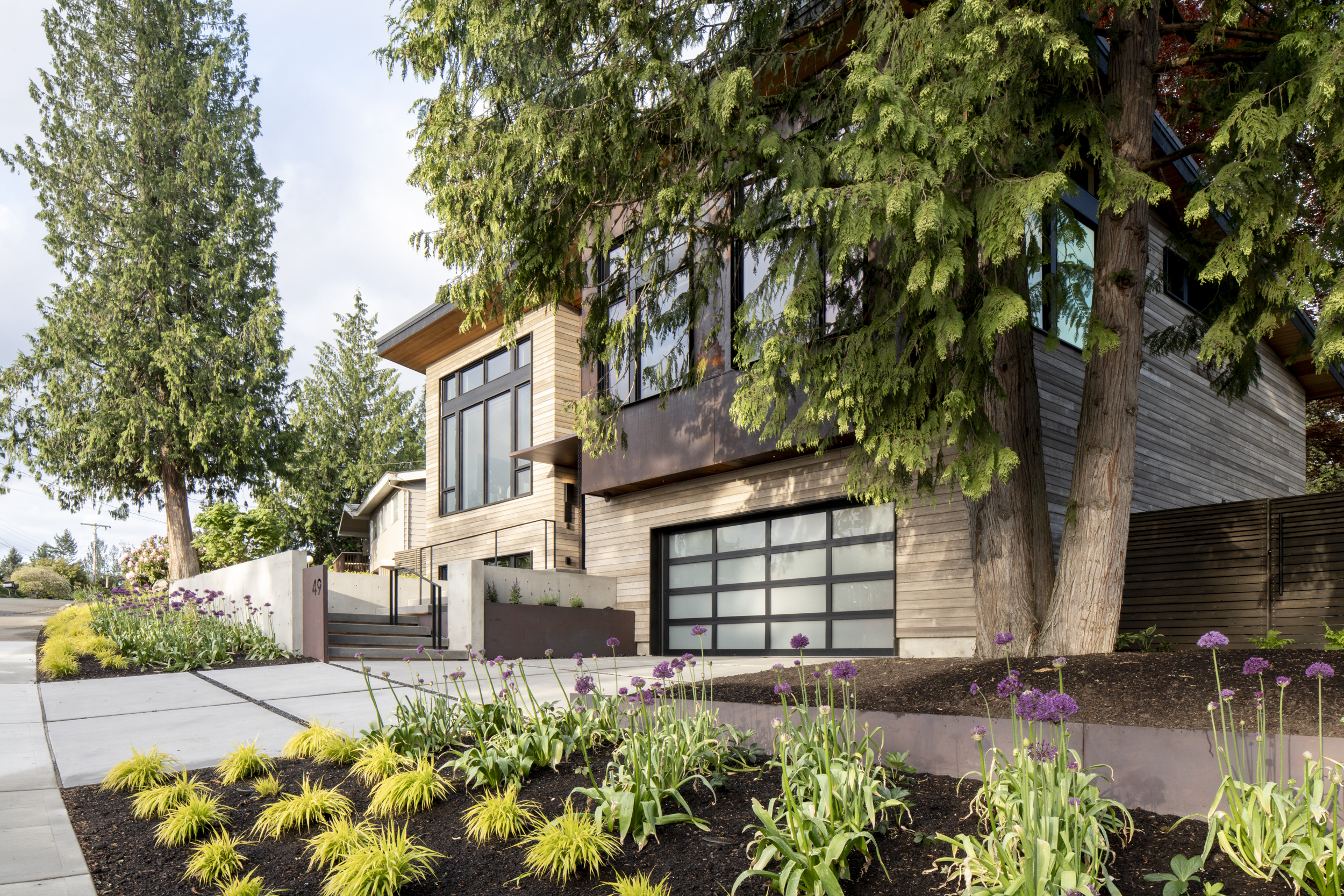
When selecting exterior siding, cladding, or architectural accents, species selection plays a critical role in overall project performance. Factors such as grain pattern, aesthetic character, durability, and long-term dimensional stability all influence how a material performs in exterior environments. For certain wood species, thermal modification is a process that can enhance key performance characteristics—including resistance to moisture, biological decay, and dimensional movement—without the use of chemical preservatives.
To provide transparent, data-backed insight into how thermally modified wood performs, Montana Timber Product’s samples of thermally modified Southern Yellow Pine and Western Hemlock were evaluated through independent laboratory testing by the LSU AgCenter Wood Durability Laboratory.
The results (Report #WDL-2025-03b) demonstrates how the thermal modification process enhances the baseline characteristics of these specific species without the use of chemical preservatives.
Here is a breakdown of the data, verified by ASTM and AWPA standards.
PILLAR ONE
Rot and Insect Resistance – Testing Thermally Modified Pine & Hemlock
Fungi and insects are common considerations for any exterior wood application. The LSU AgCenter testing utilized standardized methods to evaluate how the thermal modification process alters the wood’s performance in these areas.
Fungal Decay & Rot Resistance in Thermally Modified Wood (AWPA E10)
Fungi require moisture and wood sugars to thrive. The thermal modification process alters these natural sugars, making the wood less susceptible to rot.
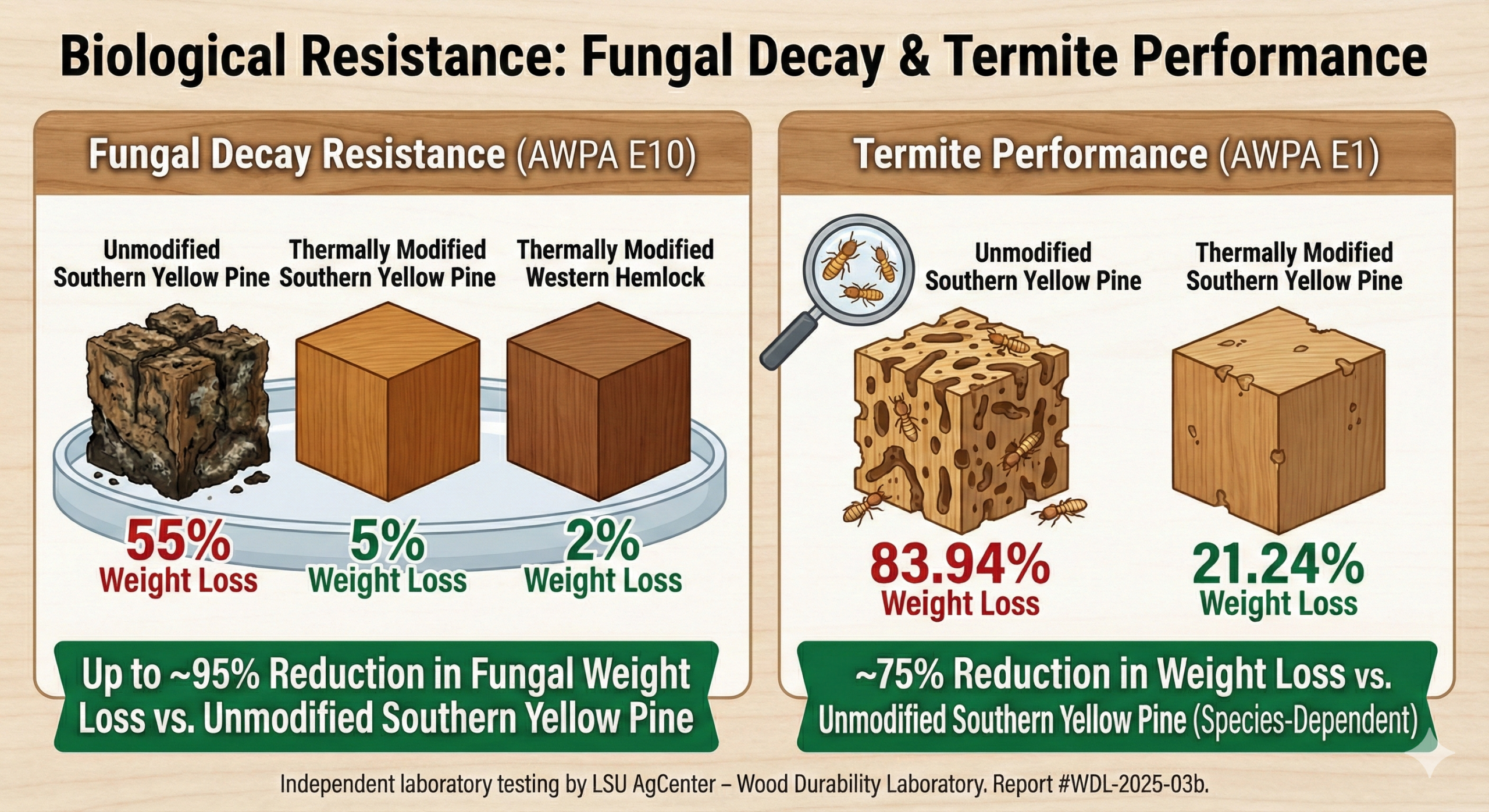
During the 12-week fungal decay test, the unmodified pine samples experienced a 55% weight loss. In contrast, the thermally modified samples demonstrated minimal weight loss.
The Data:
- Unmodified Southern Yellow Pine: 55% weight loss
- Thermally Modified Southern Yellow Pine: 5% weight loss
- Thermally Modified Western Hemlock: 2% weight loss
The Takeaway: Thermal modification achieved up to a ~95% reduction in fungal decay compared to unmodified Southern Yellow Pine, providing enhanced resistance to brown and white rot fungi.
Termite Resistance of Thermally Modified Southern Yellow Pine (AWPA E1)
Because thermal modification alters the nutritional content of the wood, it can affect termite feeding behavior. In laboratory “no-choice” tests, the modified wood showed improved resistance, particularly in Southern Yellow Pine.
- Unmodified Southern Yellow Pine: 83.94% weight loss
- Thermally Modified Southern Yellow Pine: 21.24% weight loss
The Takeaway: The thermal modification process resulted in a ~75% reduction in weight loss for Southern Yellow Pine compared to its unmodified counterpart. (Note: Performance in termite exposure is species-dependent; modified Western Hemlock performs at standard levels, making it best suited for elevated, vertical cladding applications where ground contact is avoided).
PILLAR TWO
Moisture & Dimensional Stability of Thermally Modified Siding
True exterior performance goes beyond rot and insect resistance. To ensure long-term success, the wood must also remain stable and strong through years of shifting weather and seasonal moisture.
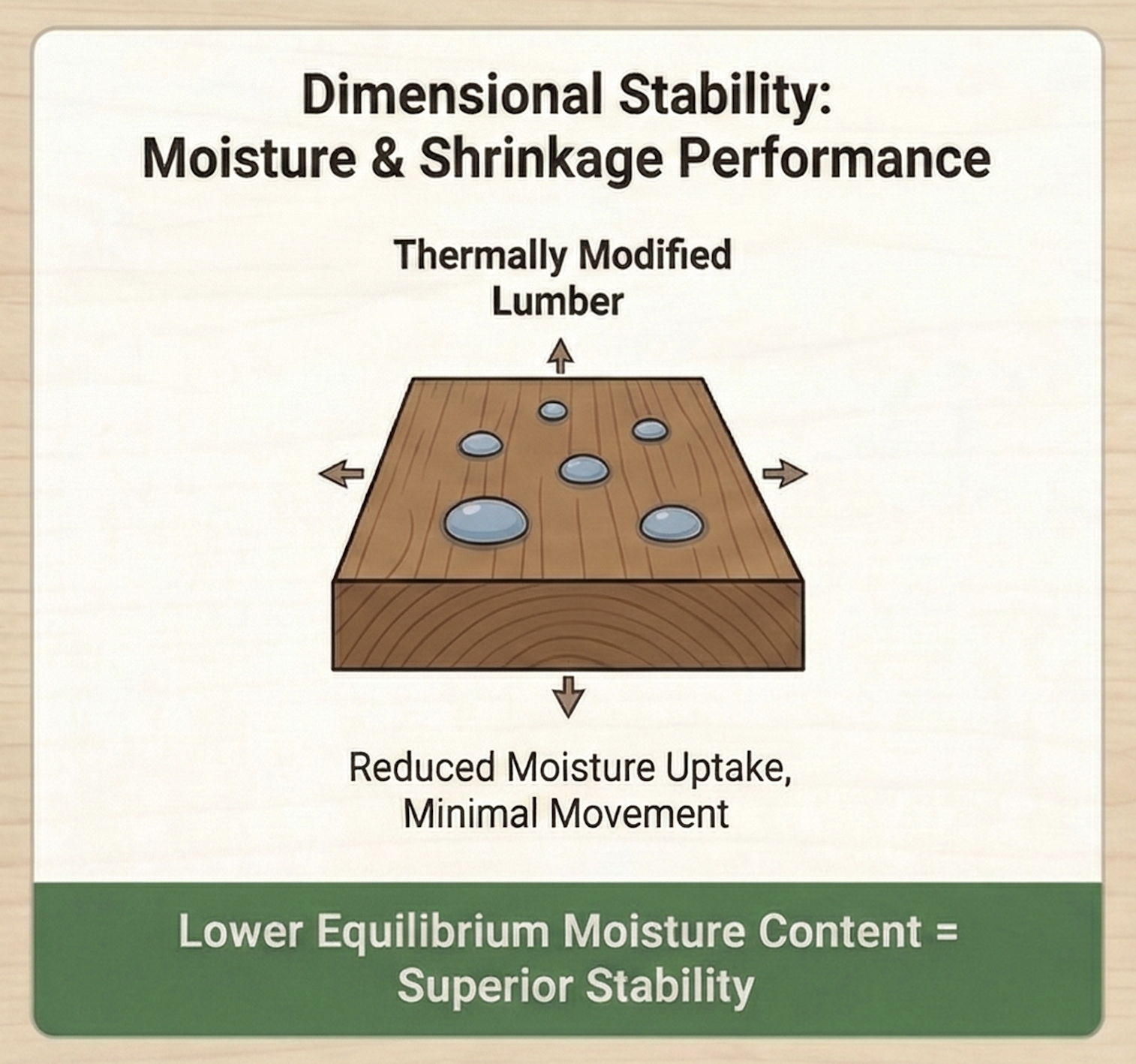
Dimensional Stability: Reducing Moisture Uptake and Shrinkage
Wood naturally absorbs and releases moisture depending on the environment. The thermal modification process lowers the equilibrium moisture content of SYP and Hemlock, meaning these specific species take on less water than they would in their unmodified state.
The Takeaway: The test data indicates reduced radial and tangential shrinkage for these modified species. This lower equilibrium moisture content helps the wood maintain its shape and minimizes seasonal movement once installed.
PILLAR THREE
Structural Integrity & Bending Strength (ASTM D143)
A common question regarding modified wood is how the heating process impacts its structural strength. Testing for Bending Strength (MOR) and Stiffness (MOE) showed that the thermally modified wood performs comparably to unmodified SYP and Hemlock.
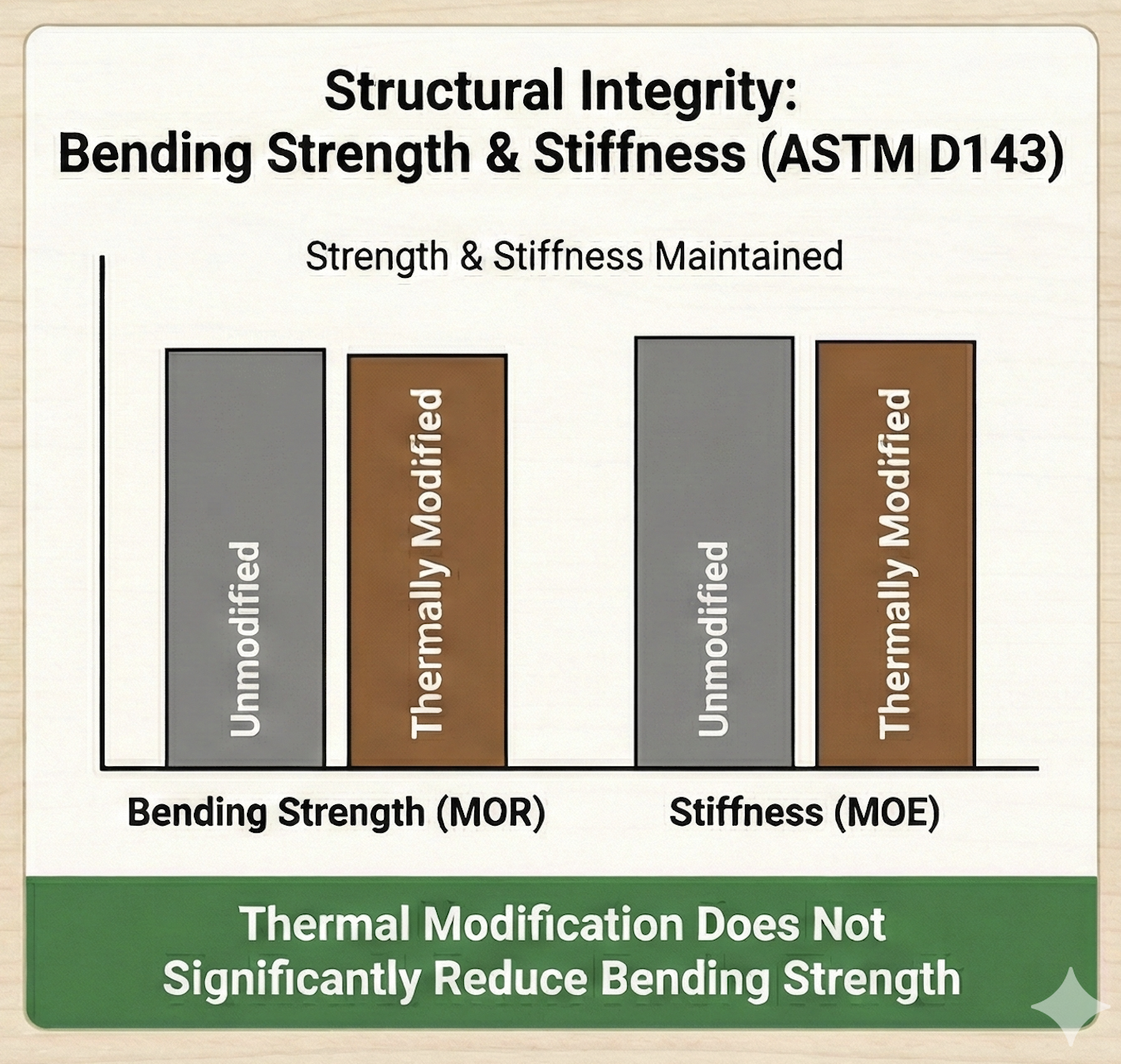
The Takeaway: Thermal modification did not significantly reduce the wood’s bending modulus or strength. It maintains the necessary structural integrity required for standard exterior cladding and siding applications.
Summary: Testing Establishes Proven Performance for Thermally Modified SYP & Hemlock Siding
The independent LSU AgCenter testing results confirm that thermally modified Southern Yellow Pine and Western Hemlock provide a reliable, high-performance alternative to chemically treated lumber.
By choosing these modified species for your next project, you are selecting a natural product that offers:
- Enhanced resistance to fungal decay compared to unmodified SYP/Hemlock.
- Improved termite resistance in Southern Yellow Pine.
- Reduced moisture uptake and dimensional movement.
- Maintained bending strength and stiffness.
Download the Full LSU Laboratory Report (PDF)
Request a Thermally Modified Sample Kit
Illustrations generated with AI (Google Gemini) based on LSU AgCenter test data.